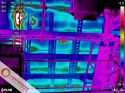
Riders enjoyed The Plunge, Redback, Ferris Wheels and all of Aussie World’s other rides and attractions without interruption recently when Highpoint Solutions used thermal imaging technology to inspect all electrical switchboards at the park.
“Thermal imaging is the perfect safety inspection technology for theme park rides and similar systems because it doesn’t require any downtime of either the plant or equipment being inspected,” said Highpoint Solutions founder and director Justin Dravsnik.
“In fact, it’s even better that way because we want the systems being tested to be loaded above 50 percent in order to highlight any electrical faults or hot spots,” he added.
Thermal imaging (Infrared Thermography) involves acquiring thermal images (thermograms) or radiometric videos similar to the way you capture photo/videos on a regular camera, Justin explained, however the images are made up of heat signatures (emitted infrared energy) instead of light. This makes the diagnostic technology non-invasive and it can be used in a wide range of electrical controllers and circuits, building inspections, flood and moisture assessments, and other settings.
Justin pointed out that there’s a heightened awareness of theme park safety after the 2016 Dream World tragedy on the Gold Coast where four people tragically lost their lives. “The Dream World incident has prompted operators to apply best practices to their risk mitigation strategies and implement greater preventative maintenance measures,” he said. “I think these renewed efforts are giving theme park visitors today a lot more peace of mind.”
“It took us a number of days to inspect and report on all of the electrical distribution panels at Aussie World. Approximately half of that time was in the field taking the thermal images; the other half was image processing, analysis, and reporting,” Justin said.
“It was a sizeable job with more than 40 separate areas that had electrical switchboards and components requiring imaging. Along with all the park’s rides, there was the iconic village which included; the pub, restaurant, shop fronts, service station and other areas that required inspection,” he continued.
Highpoint Solutions is a nationwide specialist thermographic inspection company based in Eumundi on the Sunshine Coast. Aussie World is located in Palmview and has been in operation since 1989.
####
For additional information contact:
Highpoint Solutions
Ph: 1300 851 842