What exactly is the role of an insurance company?
The primary function of an insurance company is to safeguard your business against financial losses. They help homeowners and business to protect themselves or recover from economical losses, caused by natural disasters or other catastrophes. In order for them to achieve their purpose, they have to be resilient to economic losses as well.
Insurance companies offer all kinds of contracts depending on what you want to insure. When it comes to households, we do not usually have all the risks in mind, but businesses want to be prepared in every situation. Whether the office printer breaks, or the elevator needs a fix, the building’s HVAC system is malfunctioning, or a fire outbreaks, smart businesses place a high priority on ensuring they have the right level of cover.
What do they offer?
Investing in our homes and businesses is a big step for the owners, which means constant commitment and of course responsibility. Anyhow the investing does not stop when you get the keys to you building or business, but it actually continues with ensuring that they are offering the comfort we need and most of all that they are safe.
When insuring your home, most of the time you’ll have insurance for the following risks:
· fire outbreak
· lightning strikes
· explosion
· storms
· hail
· demonstrations
· water spillage from installations
· burglary and robbery
· necessary accommodation costs in case of total damage
· sliding and landfall
· snowy avalanches
· earthquake
· flood
Can we act upon risks and prevent them?
As we can see, on the one hand some of the risks are natural disasters and we cannot influent them in any way, let alone stop them. While on the other hand the majority of the risks can be prevented.
Fire outbreaks can be caused by human negligence, which of course cannot be prevented, but they are often caused by loose electrical installations, overloads, over-currents, over-voltages etc. which of course can be acted upon. Explosions are similar to fires, on the one hand we can’t protect ourselves from them but in some cases, we can prevent them.
Risks as water spillage from installations are in most of the time caused by old and exhausted installations, or defective ones. These kinds of risks can also be stopped.
After we insure our households or businesses, people do not pay too much attention to the risks or about preventing them, because they know they have insurance so whatever happens, the insurance has their backs.
On the contrary insurance companies must protect their own backs by preventing some of the risks they give insurance for. One of the ways to do that, is by implementing or using property inspection methods based on electrical thermography.
Electrical thermography as a risk mitigation strategy for insurance companies
If insurance companies decide to play that card, with using electrical thermography as a pre-insuring risk-avoiding strategy, they need to review the potential risks, the losses if they happen, or the gains if they act on time. With evaluating the amount of money they could lose and comparing that with the costs of using the electrical thermography inspection, there will be a big difference in the numbers.
As we mentioned, fire, explosion or water spillage can be prevented. How can electrical thermography help here?
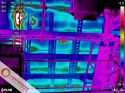
Electrical thermography as a contactless inspection method can be used for detecting the current state of thermal insulation, moisture penetration, inspecting the construction materials under the dry-wall surface, scanning the electrical elements, detecting air leaks etc. Many of these are connected with the risks that insurance companies offer protection for, which means that using the electrical thermography as a pre-insurance strategy helps insurance companies to protect themselves from potential economical fiascos.
As mentioned above, simple calculations can show how electrical thermography can be of big help to insurance companies and of course protect the people or businesses that use insurance as a way of protection.
We Would Love to Show You What We Could Do for You
Electrical thermography benefits insurance companies by identifying developing electrical problems before they become an issue. Highpoint Solutions are your leading electrical thermography company located on the Sunshine Coast, Queensland. Give us a call on 0407 202 064, or send an email to Highpoint Solutions. We would love the opportunity to show you what we could do for you.
To learn more about the technicalities of infrared thermography, or to schedule your next survey, be sure to contact us on 0407 202 064 and ask for Justin.